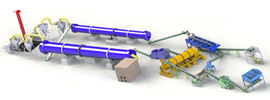
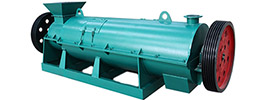
Horizontal composting fermentation tanks are efficient and eco-friendly equipment for organic waste treatment, offering the following key benefits:
1. High-Efficiency Fermentation, Shortened Cycle
- Controlled Closed Environment: The fully enclosed tank design enables precise regulation of temperature (50–70°C), humidity (50–65%), and oxygen levels, accelerating microbial decomposition. The fermentation cycle can be reduced to 7–15 days, significantly shorter than the 30–60 days required for traditional open-air composting.
- Uniform Mixing: Built-in stirring mechanisms or rotating tank structures ensure thorough material blending, preventing local anaerobic conditions or overheating, thus enhancing fermentation efficiency.
2. Environmentally Friendly and Energy-Saving, Reduced Pollution
- Odor Control: The closed design effectively blocks odor emissions, and when paired with biofilters or deodorization systems, achieves over 90% odor purification, meeting environmental discharge standards.
- Energy Efficiency: Some models utilize waste heat from fermentation for insulation, reducing energy consumption, while others incorporate solar-assisted heating to further lower operational costs.
- Zero Wastewater Discharge: Condensate recovery systems treat water generated during fermentation, preventing secondary pollution.
3. High Automation, Easy Operation
- Smart Control: Equipped with PLC systems, real-time monitoring of temperature, humidity, and oxygen is possible, with automatic adjustments to ventilation and stirring frequency, minimizing manual intervention.
- One-Touch Start: User-friendly interfaces and remote monitoring capabilities make it suitable for large-scale production or decentralized treatment scenarios.
4. Space-Efficient and Highly Adaptable
- Compact Design: Horizontal tanks occupy minimal space, ideal for land-constrained areas or indoor installations.
- Modular Scalability: Multiple tanks can be connected in series to adjust capacity based on processing needs.
- Versatile Feedstock: Handles diverse organic wastes, including livestock manure, straw, sewage sludge, and kitchen waste, producing mature compost suitable for direct agricultural use or further processing into granular fertilizers.
5. Stable Product Quality, Enhanced Fertilzer Efficacy
- Uniform Maturation: Forced mixing and precise temperature control ensure complete decomposition, eliminating pathogens, weed seeds, and insect eggs, with a 99%+ harmlessness rate.
- Nutrient Preservation: The closed environment reduces nitrogen loss, with organic matter content reaching 40–50% and total NPK ≥5%, offering superior fertilizer efficacy compared to traditional compost.
- Soil Improvement: Long-term use increases soil organic matter, improves structure, and enhances crop resilience.
6. Significant Economic Benefits
- Reduced Labor Costs: Automation cuts manual labor requirements, needing only 1–2 operators per shift.
- Accelerated Production: Rapid composting improves equipment turnover, enabling annual processing capacities of thousands to tens of thousands of tons.
- Value-Added Byproducts: Mature compost can be sold directly or further processed into high-value products like specialized fertilizers or biochar-based fertilizers.
7. Policy Support and Market Potential
- Government Subsidies: Aligned with national "dual carbon" goals, some regions offer 30–50% subsidies for organic fertilizer production equipment.
- Growing Market Demand: With organic agriculture expanding, demand for organic fertilizers is rising at over 10% annually, ensuring a short payback period (typically 2–3 years) for equipment investment.
Applications
- Large-scale livestock farms (manure treatment)
- Agricultural cooperatives (straw utilization)
- Municipal sludge treatment plants
- Organic fertilizer manufacturers (continuous production)
Summary: Horizontal composting fermentation tanks address the drawbacks of traditional composting—such as long cycles, pollution, and inconsistent quality—through efficient, eco-friendly, and intelligent design. They are ideal for scenarios prioritizing processing speed and environmental compliance, offering strong returns on investment amid rising organic fertilizer demand.





 Send us a Email
 Wulong Industrial Cluster
 Have any question?